
Response Time Is the New Curb Appeal—And Staffing Drives It
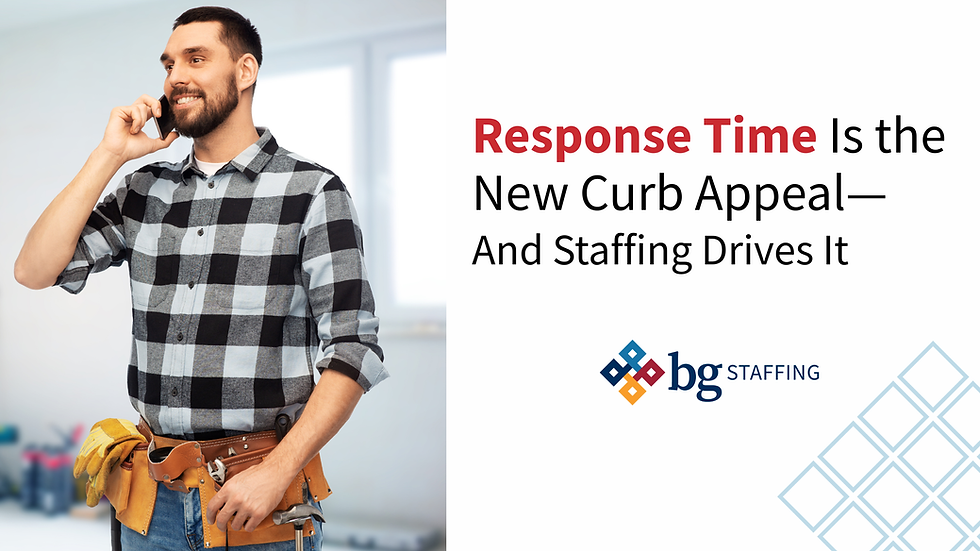
In multifamily housing, first impressions used to mean polished lobbies, fresh landscaping, and well-lit signage. Curb appeal still matters, of course, but it’s no longer the first thing that residents judge.
Today, the real first impression is response time.
How quickly a prospect gets a reply.
How fast a maintenance issue is acknowledged.
How long a resident waits before feeling heard.
In a world where expectations are shaped by instant everything, response time has become the new curb appeal. And behind every fast, consistent response is one critical factor: staffing.
The Shift: From “Looks Good” to “Feels Responsive”
Multifamily living has entered an experience-driven era. Residents don’t just compare properties in their market; they compare every service interaction they have in daily life.
If a prospective resident sends an inquiry at 2:00 PM and doesn’t hear back until the next morning, that property has already lost ground. If a maintenance request sits unanswered over a weekend, frustration builds fast. And once responsiveness breaks down, perception of the entire community follows.
In addition to how a property looks, it’s now more about how it moves. Speed, clarity, and communication now define quality.
Why Response Time Directly Impacts Occupancy and Retention
Slow responses don’t just create inconvenience. They create doubt in the mind of the resident.
Prospects wonder if the community is organized.
Residents question whether their needs will be prioritized.
Renewals become less likely when communication feels inconsistent.
On the flip side, faster responses create trust before a lease is even signed. It signals reliability, structure, care, and, in many cases, the difference between winning and losing a lease isn’t price or amenities, but who responded first and most effectively.
The Hidden Driver Behind Response Time: Staffing
Here’s the part that often gets overlooked: response time isn’t just a process issue. It’s a capacity issue. Even the best systems break down when teams are stretched too thin. When staffing is tight, teams are forced into reaction mode:
Leasing agents juggling walk-ins and online leads simultaneously
Property managers are pulled into constant interruptions
Maintenance teams prioritizing urgency over consistency
Regional leaders stepping in to fill operational gaps
The result is a slower, inconsistent response. And inconsistency is what residents notice most.
Where Staffing Breaks Down Responsiveness
Understaffed Leasing Teams: Leads sit longer than they should, especially after hours or during peak seasons. That delay can mean losing a prospect before the conversation even starts.
Maintenance Backlogs: Even minor requests begin to pile up, extending turnaround times and increasing resident frustration.
Burnout and Turnover: Overworked teams don’t just respond slower—they leave. And every turnover resets training, consistency, and service quality.
Lack of Coverage Across Time Gaps: Evenings, weekends, and holidays often expose staffing gaps that directly impact response time.
Staffing as a Strategic Advantage
The strongest-performing communities are shifting how they think about staffing. Instead of treating it as a reactive fix, they’re using it as a performance lever.
That means:
Scaling teams based on demand cycles
Using flexible staffing models during peak leasing seasons
Ensuring maintenance coverage aligns with resident expectations
Reducing response lag through built-in operational support
When staffing is aligned with demand, response time stops being a weakness and becomes a competitive advantage.
The Real Outcome: Experience You Can Feel
When staffing supports response time, everything changes:
Leads are engaged while interest is highest
Residents feel acknowledged and valued
Maintenance feels proactive instead of reactive
Teams operate with more focus and less chaos
And perhaps most importantly, the community feels different. Not just maintained, but managed with intention.
The Clock is Ticking
Curb appeal still opens the door, but response time is what keeps people inside. In today’s multifamily landscape, fast, consistent communication is now the baseline expectation. And meeting that expectation depends on one thing more than any technology or amenity upgrade ever will: having the right people in place at the right time. Because at the end of the day, staffing doesn’t just support response time. It defines it.
Ready to Improve Your Response Time?
If response time is the new curb appeal, the question becomes: Does your team have the capacity to deliver it consistently?
At BG Staffing, we help multifamily teams stay responsive, fully supported, and ready for anything. Whether you’re navigating peak leasing season, covering staffing gaps, or looking to improve maintenance turnaround times, our flexible staffing solutions are built to keep your operations moving and your residents satisfied.
Connect with BG Staffing today to strengthen your team and your response time.


Comments