
Energy Efficiency Upgrades That Pay Off Quickly
In today’s market, energy efficiency has evolved into a strategic investment. Whether you’re managing a multifamily property or maintaining a single asset, smart upgrades can reduce operating costs, increase resident satisfaction, and deliver a fast return on investment.
The best part? You don’t need a full-scale renovation to see meaningful results. Here are the energy efficiency upgrades that pay off quickly and how to prioritize them.
Top Energy Efficiency Upgrades
1. LED Lighting: The Fastest Win
If you’re still relying on incandescent or fluorescent lighting, switching to LED is one of the easiest and most cost-effective upgrades you can make.
Why it pays off:
Uses up to 75% less energy
Lasts 15–25 times longer than traditional bulbs
Reduces maintenance costs and replacement frequency
Where to start:
Common areas (hallways, lobbies, parking lots)
Exterior/security lighting
In-unit fixtures during turns
Payback period: Often less than 1 year
2. Smart Thermostats: Control Equals Savings
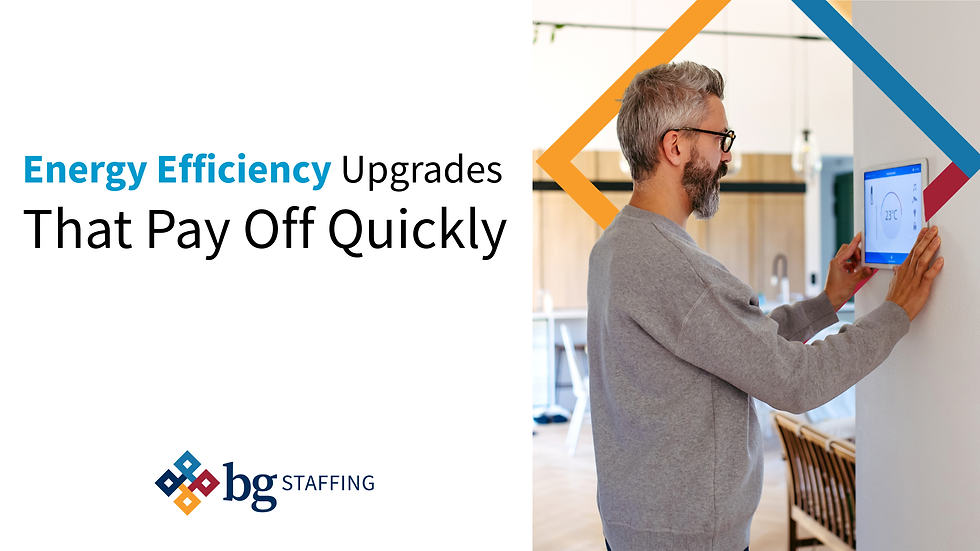
Smart thermostats allow for better temperature control, especially in vacant units or shared spaces. They also provide data insights that help optimize energy use over time.
Why it pays off:
Reduces unnecessary heating and cooling
Enables remote management
Appeals to tech-savvy renters
Bonus: Many utility companies offer rebates for installation.
Payback period: 6–18 months
3. Low-Flow Fixtures: Cut Water Heating Costs
Water efficiency is energy efficiency, especially when it comes to hot water usage.
Simple upgrades include:
Low-flow showerheads
Faucet aerators
High-efficiency toilets
Why it pays off:
Reduces water bills
Lowers the energy needed to heat water
Minimal upfront cost
Payback period: Often under 12 months
4. Weather Sealing & Insulation: Stop Energy Loss
Air leaks are one of the highest hidden costs in any building. Sealing gaps and improving insulation keeps conditioned air where it belongs.
Focus areas:
Windows and doors
Attics and crawl spaces
HVAC ductwork
Why it pays off:
Improves HVAC efficiency
Enhances resident comfort
Reduces strain on systems
Payback period: 1–2 years (often faster in older buildings)
5. Energy-Efficient Appliances: Upgrade During Turns
Replacing outdated appliances with ENERGY STAR® models during unit turns can significantly reduce consumption without disrupting occupancy.
Best candidates:
Refrigerators
Dishwashers
Laundry machines
Why it pays off:
Lower utility usage
Increased asset value
Strong leasing appeal
Payback period: 1–3 years
6. Occupancy Sensors: Eliminate Waste
Lighting and HVAC systems don’t need to run in empty spaces. Occupancy sensors ensure energy is only used when needed.
Ideal locations:
Fitness centers
Conference rooms
Storage areas
Restrooms
Why it pays off:
Prevents energy waste
Extends equipment lifespan
Low installation cost
Payback period: Less than 1 year in high-traffic areas
7. Preventive HVAC Maintenance: Protect Your Investment
Sometimes the most impactful upgrade isn’t new equipment. It’s maintaining what you already have.
Key actions:
Regular filter changes
Seasonal system checks
Duct cleaning
Why it pays off:
Improves efficiency immediately
Reduces costly emergency repairs
Extends system life
Payback period: Immediate through avoided costs
How to Prioritize Your Upgrades
Not all energy efficiency upgrades need to be implemented at once. In fact, taking a phased, strategic approach often delivers better results with less disruption. The key is to start by identifying where your property is currently using the most energy. High-consumption areas like lighting, HVAC systems, and water heating typically offer the greatest opportunity for immediate savings, making them the smartest place to focus your initial efforts.
From there, prioritize low-cost, high-impact improvements that are easy to execute but deliver measurable returns. Simple changes, such as upgrading to LED lighting, installing faucet aerators, or sealing gaps around windows and doors, can significantly reduce energy waste without requiring major capital investment. These quick wins not only lower expenses but also build momentum for larger initiatives down the line.
It’s also important to take advantage of natural turnover cycles. Unit renovations, seasonal maintenance, and vacancy periods provide the perfect opportunity to implement upgrades with minimal disruption to residents. By aligning efficiency improvements with work that’s already planned, you can maximize both time and budget.
When approached this way, energy efficiency becomes an ongoing strategy rather than a one-time project. Layering upgrades over time allows savings to compound, improves overall building performance, and enhances the resident experience, ultimately positioning your property as both cost-efficient and forward-thinking in a competitive market.
The Bottom Line on Energy
Energy efficiency upgrades don’t need to be costly or complex to make a meaningful impact. By prioritizing improvements with fast payback periods, you can quickly reduce operating expenses, boost NOI, and enhance the overall resident experience, without overextending your budget or team. Properties that invest in smart, high-impact upgrades position themselves to operate leaner, attract and retain residents more effectively, and stay ahead in an increasingly performance-driven industry.
Looking to implement energy-efficient upgrades without overloading your team? The right staffing strategy can make all the difference. Connect with BG Staffing to ensure you have the skilled professionals needed to execute improvements quickly and effectively.


Comments